Two Mountain Winery Rattlesnake Hills · Washington State

2022

Brothers
Reserve Collection

Selected row by row.
Built barrel by barrel.

Explore the wines ↓ Copeland Vineyard

The Brothers Rawn

It Started
With Two Lists.

The origin of this project goes back to a time when the Two Mountain team consisted of just the Brothers Rawn.

Blending wine in those days meant Matt picked his favorite barrels and Patrick picked his. Whichever barrels appeared on both lists made the cut. Simple as that. Too young and naïve to make it more complicated.

Today, the Brothers Rawn still choose their favorite barrels—from their favorite blocks in their favorite estate vineyard sites. Aged a little longer. Loved a little more.

No playbook. No “market insights.” No annoying budget. No rules. What we want to make. How we want to make it.

Patrick and Matt Rawn standing in an estate vineyard
Patrick Rawn / Matt Rawn Brothers / Owners Fourth-Generation Farmers

The Process / Matt Rawn

Old School.
On Purpose.

The BROS decision tree begins in the vineyard, with rows identified more than fifteen years ago, and continues through harvest parameters, fermentation, barrel decisions, aging and final blending trials.

The grapes used in this program are different. We treat them that way.

We do not simply take the best two or three barrels. We also do not combine every barrel in a tank and bottle the volume we want. Every barrel remains its own entity.

We trial different percentages of different barrels until each wine has been narrowed to three to five possible versions. Then we taste the samples blind.

We split hairs, over-evaluate, second-guess, look through the crystal ball and make the most educated guesses we can. The goal is not simply a wine that works. It is the best version. Old-school philosophy. Old-school method.

Five Questions / One Decision

  1. 01 What wine is it?
  2. 02 What defines it from a varietal standpoint?
  3. 03 Is it drinkable now?
  4. 04 What will it be like in ten-plus years?
  5. 05 How does it make us feel? Does it speak to us?
“Did we do the job—from the field through fermentation and aging—to capture the brilliance of this unique place?”

The 2022 Collection

Three Wines. One Place.

One vintage. Two brothers. Three expressions of Copeland Vineyard.

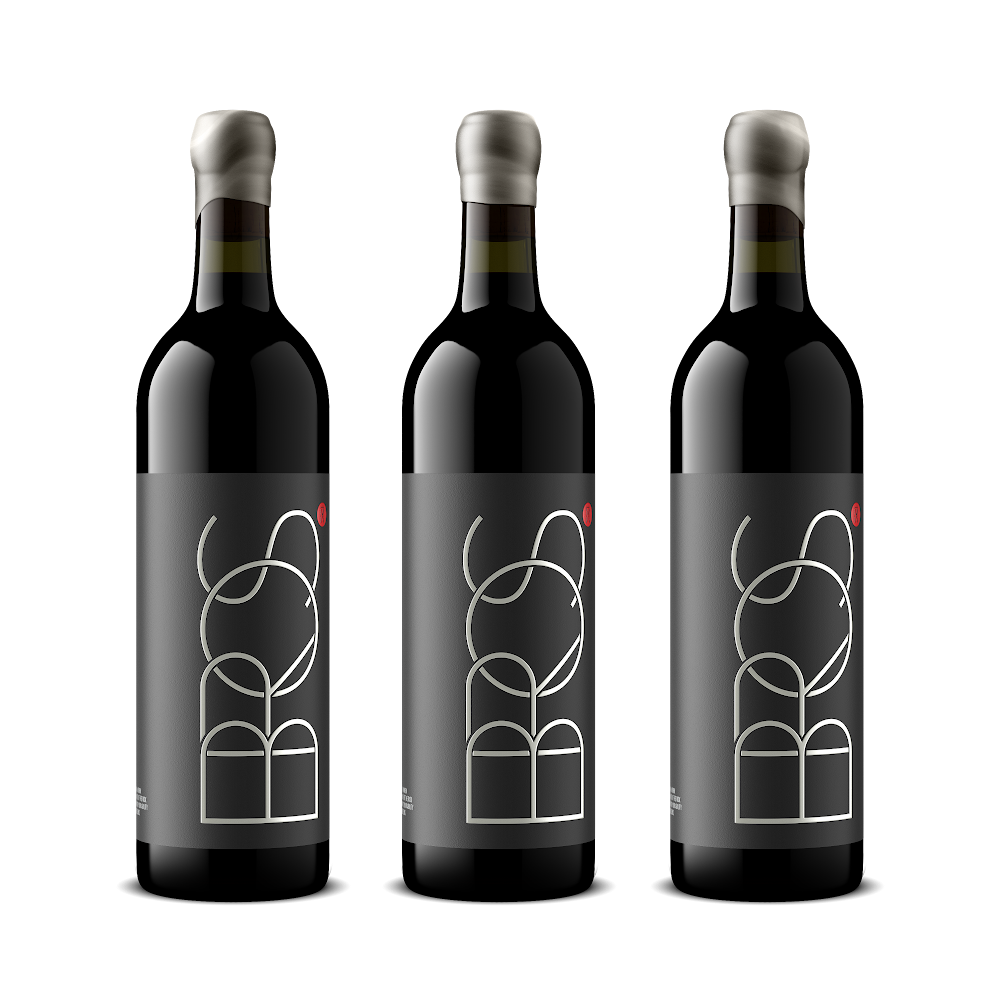
Three bottles from the 2022 Brothers Reserve Collection

The 2022 Wines

From the Cellar / Matt Rawn

Owner / Winemaker

The barrels, blind trials and decisions behind three expressions of Copeland Vineyard.

01

Blend No. 12

58% Merlot · 19% Cabernet Franc · 19% Cabernet Sauvignon · 4% Syrah

“When we tasted them blind, all of us just kind of stared at this sample. Silence speaks volumes.”
Alcohol
13.9%
Élevage
44 months
Oak
100% French oak
80% new / 20% third-fill
Production
84 cases
Vineyard
Copeland Vineyard
Matt’s Full Notes

Before we could connect the dots around what made us different—and why the grapes and wines from Copeland Vineyard were different—we knew we just bloody loved Merlot from that spot. We drank F’ing Merlove, and we weren’t going to shy away from it.

The Blend is the first BROS wine we ever made. Back in the day, it was the only BROS and it was Cabernet Sauvignon based. When we expanded the brand, Pat and I looked at each other while tasting barrels and said, “F-it. Let’s make the Blend Merlot based and still charge about $70 a bottle—in Zillah. It’s that good.” So we did. And we heard about it until people tried it. Then we still heard about it, but differently.

The Blend is just as complicated to trial, if not more so, than the single varietals. The Merlot is grown specifically to be the predominant variety. We begin with more barrels than we will ultimately need and treat every barrel as its own entity. Then we add every potential barrel of Cabernet Sauvignon, Cabernet Franc and Syrah. That is the daunting fun.

A well-made Merlot-based blend needs a different kind of sex appeal. Powerful yet elegant. Soft enough to enjoy now, but big enough to age. Sexy, approachable, complicated and simple at the same time. This vintage and this blend did exactly that.

02

Cabernet Franc

100% Cabernet Franc

“It has to be right, or it just ain’t right.”
Alcohol
13.7%
Élevage
44 months
Oak
100% French oak
75% new / 25% third-fill
Production
84 cases
Vineyard
Copeland Vineyard
Matt’s Full Notes

Cabernet Franc is, to us, the star of the Rattlesnake Hills. It is our favorite variety, and we learned early that it is a bit more difficult viticulturally than Merlot or Cabernet Sauvignon. When grown correctly, it is one of the prettiest varieties on the planet.

I once had the pleasure of talking with the late, great David Lake, MW—I was maybe 23—about Cabernet Franc. He mentioned the nuance people immediately search for in the great ones: pyrazines are needed, but there is a fine line between not enough and atrocious. When you find it, hold on, because it is beautiful.

Maybe that is why we revere it. It has to be right, or it just ain’t right. Between the knowledge gained from being farmers first and having the old guard of Washington winemakers as mentors, this is where BROS Cabernet Franc starts and ends.

The 2022 did that and then some. We started with four barrels—three new and one third-fill—all French oak, and blended to 3.2 finished barrels. Five blind samples were all incredible, but the best combined suppleness, acid, finesse, structure, beautiful tannins and just enough of the “guy in the corner” personality to know it was Cabernet Franc.

03

Cabernet Sauvignon

100% Cabernet Sauvignon

“I want to know I can have it at a Michelin Star or on my tailgate.”
Alcohol
13.9%
Élevage
44 months
Oak
100% French oak
80% new / 20% neutral
Production
84 cases
Vineyard
Copeland Vineyard
Matt’s Full Notes

One of the common comments we used to hear in the tasting room before BROS was, “This is a lighter Cab.” Our response was always, “But is it?” Inevitably, the customer would realize it was big—it just took a second to hit.

Cabernet Sauvignon from Copeland Vineyard is not blunt force through the center palate. It travels, lingers and does not go away. Then the tannins arrive, and you realize you could use a piece of red meat or a good conversation, but you are not fatigued by it. This is where we realized we are more France West than California North.

When we expanded BROS, we knew exactly which rows of Cabernet Sauvignon to use. Copeland Vineyard told us. Those vines always looked slightly different, the fruit ripened differently, and the finished wines took longer to become bottle-ready.

During trials, I am looking for depth, elegance, acid, tannins, weight and subtlety. It cannot be overpowering or fatiguing. Basically, I cannot need a beer after tasting it. I want to know I can have it at a Michelin Star or on my tailgate.

We began with seven barrels as individual entities and blended to the equivalent of 3.2 barrels. The final wine was not our initial favorite, but we kept returning to it. It continued evolving in the glass. It became an experience. That was when we paused and said, “We need to listen to the glass. If it is doing this now, it will do it over time in the bottle.”

Vineyard Notes / Patrick Rawn

The 2022 Growing Season

“2022 started out as a challenge and ended up a dream.”

The first half of the year was defined by well-below-average temperatures and a very cool start. On April 11, a snow event caused bud damage—something we had never seen before and haven’t seen since. By bloom, we were 18% behind the 15-year GDD (growing degree day) average. Bloom in Copeland Cabernet Sauvignon extended through June 18.

Summer flipped hot, bringing three distinct five-to-seven-day heat spikes above 104°F.

Then October changed everything. A fantastically warm, extended finish allowed the fruit to hang to proper ripeness without Brix spikes. Acid retention remained strong, although pH and TA were behaving in an oddly correlated way.

Water supply remained full, disease pressure stayed very low, and crop loads ran average to heavy.

The warm October gave us classic fine-grained tannins and grip, with the freshness and lift we have come to love from the region. Harvest dragged on—the stragglers didn’t finish until November 12—and we were all very happy to be done.
Brothers Harvest Dates / Copeland Vineyard

Merlot / Blend No. 12

October 18 & 22

Cabernet Franc

October 26

Cabernet Sauvignon

October 27 &
November 2

Trade Inquiries

Let’s talk
Brothers.

Allocations, samples, market support or technical questions- Abbe is your person. She can even wrangle Matt for a market visit/staff education.

Abbe Davidson

National Sales Manager

Email Abbe Call or text · 319.721.8370